What kind of speaker is this?
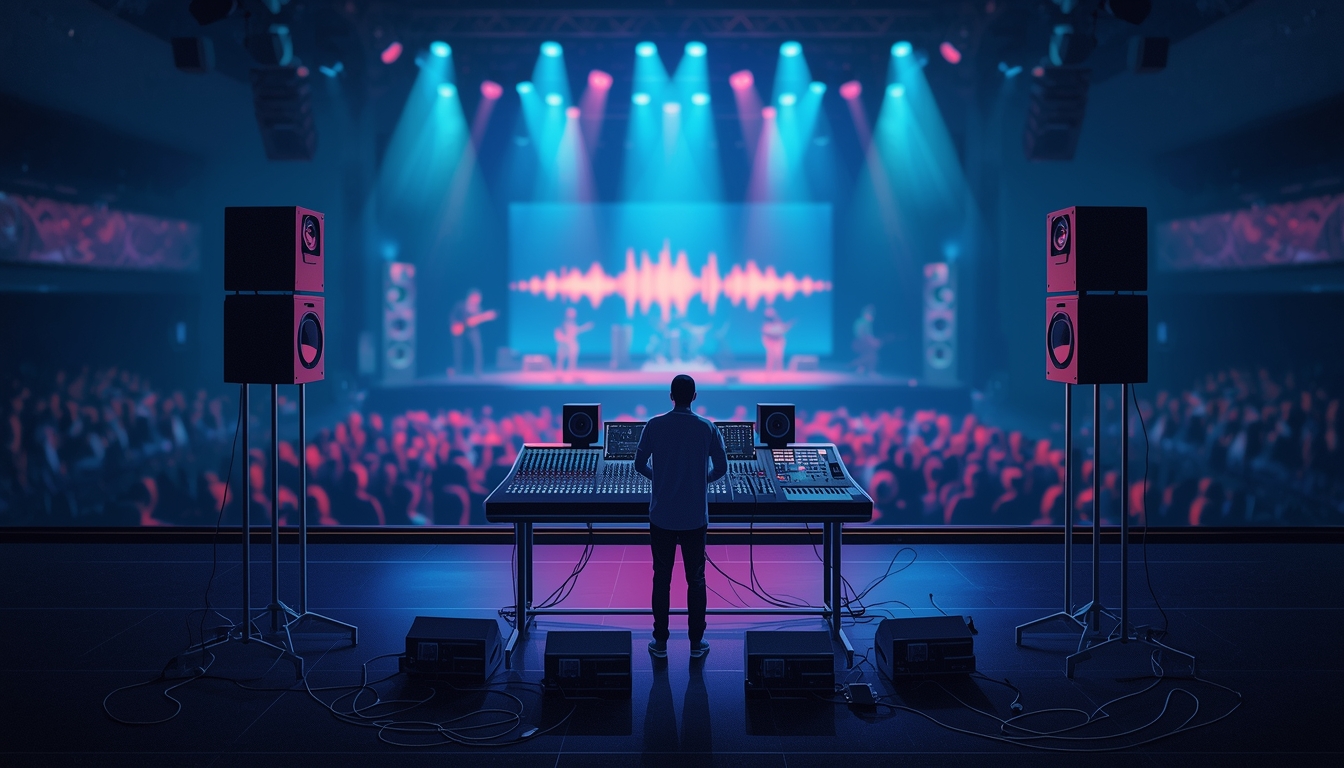
This article is meant to be a support and extension of the Part 2 of The Basics of Church Sound (TBCS) series, but, you can read it indepently anyways.
Before we go any further, I want to clear up a very common source of confusion in church sound, amongst beginners.
When people hear terms like FOH, delay speakers, or stage monitors, they often assume these are different kinds of speakers.
They are not.
These names describe what a speaker is being used for, not what the speaker is.
Understanding this will save you from a lot of unnecessary confusion — and unnecessary spending.
Speakers Are Speakers
At the most basic level, a speaker has one job:
To convert audio (electricity) back into sound (air movement).
That’s it.
A speaker does not magically become “FOH” or “monitor” because of how it was manufactured.
It becomes those things because of:
- where it is placed
- what signal is sent to it
- who it is meant to serve
The purpose determines the name.
One Mixer, Many Destinations
Earlier in the series, we said something important:
Mixers have multiple inputs and multiple outputs.
From the same mixer, you can send:
- one signal to the congregation
- another signal to singers on stage
- another signal further back in the hall
Each output can feed a different amplifier or speaker, depending on the setup.
This is the foundation for understanding FOH, delays, and monitors.
FOH (Front of House)
FOH simply means Front of House.
FOH speakers are:
the speakers that feed the congregation.
That’s all it means.
When you mix sound and send it out of your mixer to speakers facing the audience, those speakers are serving an FOH purpose.
Whether it’s:
- two speakers
- a line array
- a mono setup
- a very small church hall
If the speaker is feeding the people listening, it is functioning as FOH.
Delay Speakers (Why They Exist)
Now let’s talk about delay speakers.
In small rooms, FOH speakers alone are often enough.
But as the room gets longer, a problem begins to appear.
Sound does not reach everyone at the same time.
People closer to the front hear the sound first.
People further back hear it slightly later.
The delay is usually not seconds — it’s milliseconds — but it’s enough to cause, echo, smearing, loss of clarity, distraction, etc.
This is where delay speakers come in.
Delay speakers are placed further back in the room, receive the same signal as the FOH, are time-aligned so the sound reaches listeners at the same moment
The goal is simple:
Everyone hears the sound as one coherent event.
Delay speakers are not special speakers.
They are speakers given a timing role in the system.
Depending on the length of the room, you may have, one set of delay speakers or multiple delay zones Again — purpose defines the name.
Stage Monitors (Feeding the Stage)
The congregation is not the only group that needs to hear sound.
The people on stage also need to hear:
- themselves
- each other
- key instruments
- musical cues
Stage monitoring exists for this reason.
Floor Monitors
In many small churches, this is done using:
- speakers placed on the floor
- facing the singers or musicians
These are called stage monitors or foldback speakers.
They receive audio from the mixer, just like FOH speakers — but usually a different mix.
In-Ear Monitors (IEMs)
Some churches use in-ear monitors instead.
These are not speakers in the room, but speakers for your ears.
They still:
- receive audio from the mixer
- serve the same purpose as stage monitors
- just deliver sound in a different way
The method changes.
The purpose does not.
One Speaker, Different Roles
Here’s the key idea I want you to take away:
A speaker’s name comes from what it is doing, not what it is.
The same speaker:
- might be used as FOH in one room
- used as a delay speaker in another room
- used as a stage monitor in a smaller setup
Context matters.
Room size matters.
Audience size matters.
Desired loudness matters.
This is why you should never permanently lock a speaker in your mind as:
“This speaker is only for FOH”
“This one can never be used as a monitor”
Those decisions come after you understand the purpose.
A Note on Speaker Specifications (Briefly)
You may hear terms like:
- frequency response
- sound pressure level (SPL)
- impedance
- coverage pattern
These specs help determine whether a speaker is suitable for a given role.
But specs do not define the role by themselves.
Two churches can own the same speaker:
- one uses it as FOH
- the other uses it as a delay
- both are correct
I’ll point you to resources that explain these details better than I can in a short article.
Why This Understanding Matters
When you understand speaker roles this way:
- system design becomes clearer
- troubleshooting becomes easier
- gear decisions become smarter
- you stop copying setups blindly
You begin to ask better questions:
- Who am I trying to feed?
- Where are they sitting or standing?
- What problem am I trying to solve?
That’s how good sound systems are built.
Final Thought
FOH, delay speakers, and stage monitors are not mystical concepts.
They are simply solutions to human listening problems:
- distance
- timing
- audibility
- clarity
Once you understand the purpose, the names stop being confusing.
And once the names stop being confusing, learning audio becomes much easier.